Saturday, June 15, 2019

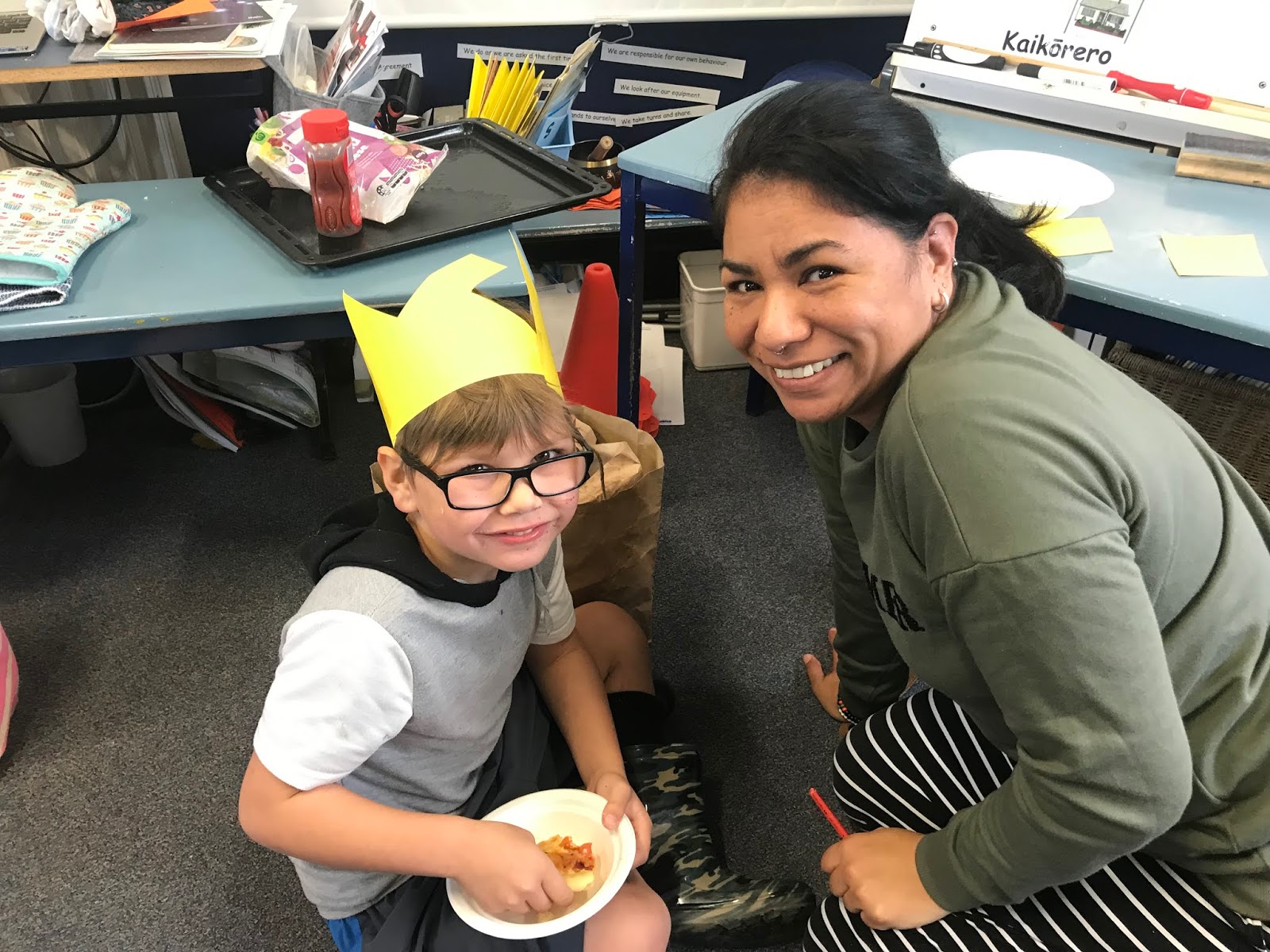
Celebrating Matariki with whānau

This year, we have celebrated Matariki together with our whānau. We made pizza and had shared kai. Many whanau brought a lot of food for us to share. It was so wonderful to be able to see our whanau, talk to them about their children and enjoy this time where we shared love for each other. We have read the book called "Matariki Breakfast" and from that children have learnt about what people do for Matariki and it is to spend time with the people we love. 

I have asked parents to write down their aspirations for their children on a star shaped piece of paper. This allowed me to know what the parents thoughts and how they want their child to grow into the future. I also thought about including some of these into the report writing highlighting what types of dispositions they have developed over time. 


Parents' aspirations 


Trying out Yolanda programme

After going to Yolanda's training. I really wanted this to be my inquiry to see how effective it will be for me and the children.
As I was waiting for the resources to arrive, I have found a good site for pictures with alphabets. I cut out just pictures to use for the Stage 2 programme.
I have gone through Yolanda's video and wrote down some steps of the Stage 2 and Stage 4 so that it will be easy for me to read as I go through the steps with the children.
Stage 1 and 2 
Stage 4 

So far I have been trying the stage 2 with the whole class and it is working really great. With my target children for the inquiry, I see them every week to see how much they have retained the letter sound knowledge.

I do feel that it makes children to feel successful as it is very achievable for the children. I felt that organising and managing the whiteboards/pens/eraser were a bit chaotic in the beginning, but I used Velcro to attach a pen and an eraser for each whiteboard and this seemed to work better so that I am not spending too much time giving out the items in the beginning.

I also feel that in the beginning, I needed the script for me to go through the steps of the Stage 2 properly but now I have done this for the last 2 weeks that I have felt more confident at doing the Yolanda programme.

Saturday, May 25, 2019

Yolanda Soryl Phonics Training

How to teach phonics.
7 stages of phonics.
Page 14-61

Phonics:
Shinderbell
Blending the sounds -essential for reading

Segmentation-breaking down the sounds

Avoid writing, writing safe stories (they know how to write these), they dont know how to break the sounds
Blending and segmentation are really important

1, how to hear
Decode- make sense- read
Look at the word and know the word
Graphic knowledge -memorising the shape  (h( sound) and is, his)
Phonics
Grammar
Word recognition and graphic knowledge
Context/meaning

Lowest reader - phonics knowledge

“Get the words” first step for comprehension
Grammar search light -reading their own writing, reread their own writing (checking what they are writing
Good writing re read , poor writers dont
Context-looking at the pictures/ rereading own writing/ does this make sense?

Best readers and writers (connecting levels)

Components of reading
Decoding
Comprehension
Fluency-reading and effortlessly (slow reader- losing meaning) Working hard at decoding-not getting the meaning. If they are able to read fluently they can attend to comprehension.

Look at the words and know just like that (brain training)

Brain activity
Good reader- left side of brain
Struggling reader- both sides
Phonics can turn the left side brain on
Our brains are not wired for reading

Dyslexia or learning needs-Genetic
Deficiency and lack of repetitions

Teach it again and again until we dont need to

“How my brain learns to read”
Teaching phonics makes a big difference later on in their life- reading
Boys- advantage to teach phonics, children with english as a second language

Hear them read out loud everyday.

Phonological awareness
Spoken language dev
Letter/sound knowledge

Importance of phonological awareness at school entry

2 sounds (stage 3)
3 sounds (Stage 4)

Stage 1
Stage 2 -they know the first sound (do they know the first sound? ) 6 weeks to teach it 1 week to test it and again
Stage 3 - last sound (one week to teach it)
Stage 4 -middle sound once  (dont teach stage 4 twice) - blending and segmentation (confusion with vowels)
Stage 5 -how to hear in every sound in a word Diagraph- sh two letters for one sound (hands on the hip)
Digraph is not a sound (a way of spelling a phoneme)
Make sure they can hear every sound of a word to move onto 6
By one year after starting school (phonics is finished by then)

Stage 6-7 - Year 2 long/short vowels (2 years after school entry)
Play  train

Late   they

So many ways to write (8 ways to write)

Page 13- system -school needing to have one system

Use phonics and graphic knowledge and ticks

The child needs to be able to read it by themselves -structured approach

Stage 1

Little and often through out a day

1 Close eyes-what can you hear?  (conversations about sounds -rain, dog barking) Tuning into sounds
Is it motorbike or truck? Teaching them to how to hear
Sound track game
Using instruments -bells/shakers 4, 6, 10 instruments Similar shaker sounds (sounds table set up) boxes with different things inside to shake


Ability to hear different sounds (feeling it in their tongue) moving tongue activity
“I say, you say”

Make animal sounds -fluency faster “On your marks” make them think faster
Naming children in the line
How quickly can they tell you, give it to them faster

Alliteration
“I say you say”  “what did you hear?” holding hands with children with learning needs

Animalia (3 words)
Starts with g with a pointing finger

Reading aloud to children 5 times a day

Rhythm coping rhythm (children not able to hold structure) children giving it back differnetly

All the things we do in music/movement -phonological awareness

Ability to hear sound breaks (sylable break, clapping with sylables) 3 times (one, two, three)
(Overcoming dyslexia)

Before the guided reading clapping
Voice loud and clapping

Robot arms sounding out and finger to blend

Rhyme -hear and generate
Nursery rhymes (make handouts to parents) Good book of nursery rhymes
Some off by heart (choose 5)
Missing word in rhyme
I like rice, it is nice.
5 rhyming families (do it faster) rhyming strands (mat, rat, fat… ) can they generate?

Phonological awareness book

Start at Stage 2 and sprinkle Stage 1  (10 minutes extra phonological awareness) Little and often

Stage 2

Letter sounds/graphine

N m s long sounds

Revising with the children who forget
Revising on their own- and getting them to wordshark and steps “what is this sound? “ toileting, duty time, every hour show the card to get them to say the sound

Stepping in before failing- keep them in the class (write the letter on the back of their hands, pointing and say the sound)


Letter/alphabet cards

Side of the teachers are the lowest
Composition :Talk to the neighbours about what they want to write about -come up with one sentence
Holding structure: clapping hands and say the sentence (teacher writing down the sentence)
Tell the children to use the sounds and words
Tell me again your story (your story is …..)
Point to the word I use bluetac next to the word I 2 hands for writing
Game-sound first sound for game g g g g game, point to it and bluetac, full stop  
And pictures next
Exactly the same next day
Everyday for 2 weeks (word by word support)
Taking the support away (giving her choices M or n?)
4 weeks later (pointing to the row of the alphabet)
One sentence everyday


Writing is your voice written down


The vowels

Practice with clapping three times combination of them

Maintenance (a e i o u strip) random order then without pictures free from the website

Copy the student say the sounds -have a look at the you tube video

Heavy duty letters

You have to go right to left so the children can do the the other way (video on site)

Smart kinds poem

Assessment
Letter name/sound/ the words start with the sound
Teach stage 2 and test

Stage 3
Nip flip grip pencil holding

Puppet fish-fit what is the sound he cant hear.if he is right  give him a round of prouse
That is called the last sound
Using pictures
First phoneme - go back and revise
First sound, last sound, last sound with a puppet


Stage 4

Non sense words -decoding words best decoders

Get to the word the fastest way
Phoneming words
Fingers and blend after
Sounding and spelling

Grapheme is written form of phonemes Shock 3 always the same
Satage 4 words
Hog
Chop
Shock

Stage 5
Frog  f r o g 4 dont need to teach the blends need to hear phonemes
Hear every sounds
Smack
Frog


Stage 6
Way 2 sounds ay

W eigh
2 sounds no matter what
Rocket
D augh t er

Phonics manual
Ask a 5 year old

Fluency
More time reading
Anyone reading aloud to them
Tuakana teina
As many opportunities for them to be reading out loud
Read faster
Train them to read faster

Stage 4-reading the cards faster
             Read the funny sentence with expression
             Letter cards
             Word cards
Give your children opportunities to know what word it is  

Stage 2 writing quickly (is my go) without thinking about it
           
Shared writing
Everybody writing
Children give the children what they can do, and teachers fills it in
What will I need? Question mark

Spelling
Take a word from a shared writing
Like touch each letter
Louder, whisper, write it on your palm, silently, sing it (L, I, K, E)
Close your eyes
Write it on your whiteboard

Stage 5 hearing every sound in a word

Get them into writing using the words they are learning
Go up a stage and revise with the previous stage
Hear every sound
Wh ck

Q u 2 phonemes (qu)

Stage 6-7 long volwes

Key words  


Sunday, April 28, 2019

The neuroscience of self care

Putting yourself first-why you need to

Put yourself first-being calm
Keep yourself calm

Stress response
Red brain-lower brain
Upper brain cortex

Sandpaper brain concept-
acknowledging and setting yourself back

Reactive-------------------------Rational  Empathic/logical---creative brain  

Sandpaper-build resilience-let yourself reset (recognising this and responds to it)
Moments of red brain moments (red brain-friendly staff room)
We cannot sustain having green brain all the time.

Reset really early

Give yourself a break -it deosnt take much to be sandpapred

Stress response
Stressor-assess the situation-activates the stress response (fight/flight response) -irrational
Keeping ourselves alive at red brain
Some of the children live in that space all the time
Teachers need to stay at the green brain
Takes a long time to calm down once the stressor is activated

How do we calm the children down?
Children become highper vigilant
Fight/flight response dry mouth, breathing changes, sight and hearing sharpen, stomach purges heart beats faster, blood increase in large muscle of arms legs

Checking in-resetting

Perfect practice makes perfect

1 Identify what calms you down (walk, run, yoga)
2 Do that until you create a physical calm state in your body
3 Condition this moment
4 Practice practice practice

Breathing: Deep breathing
Pulling the rope down -activate our lungs- Teach our children to take a deep breath


Wellbeing for teachers

Wellness
Relational teaching-emotional investment

"flow" Mihaly Csikszentmihalyi
Efficient-unstoppable-

Questions
Top 3-5 outside work activities you enjoy?
Is there an activity which you have left behind due to work?
What activities outside work and parenting define you?

Growth Mindset
S=strong
I=intelligent
C=creative

Strong: a part of wellbeing to engage our body -move for 30 min minimum
Intelligent: Creating a state of constant, inquiry, curiosity, learning (books, classes, Self authoring, language) Life long learners
Creative: cooking, music, drawing, painting...

Athletes/Artists achieve a flow state- faster and easier than others

Sense of balance
Try to tick 3 boxes when not at work
Create a behavioural pattern-bring your identity back


Impact of Early Trauma

Impact of Early Trauma by Kathryn Berkett

Change how our children are processing the world
Working with the children to help the brain change

insults into the brain-can influence their life

the first 1000 days from the conception are really important
Neuro sequential

The importance of a solid foundation- if the foundation is not solid, keeps wobbling.

Singing
Touch
Rock
Covering with a blanket

Children tend to reenact these experiences -repetitive rhythmic routines

Brain bottom to top to develop
Red brain
Green brain

Survival brain-develop for the first 2 years-learn to operate speech, eating (Am I safe?) -Attachment theory-someone cares about me, trust/mistrust
Constant chaos-telling the brain-not feeling safe (feeding, eating, touch)
Touch -essential developmental part
If not feeling safe, they develop the survival brain
Slight change of the facial expressions can be determined as a fight situation for children who were neglected
Limited in emotional abilities
They wont go to the next developmental stage
Emotional brain 


Managing brain (empathy, planning, organising) 


Early trauma can influence the children's life

The importance of the environment
86 billion cells no alcohol/drugs/cortisol (stress)  the body can protect cortisol in our body
Connections are made by experiences
Has the child learnt the language of respect/turn taking/?
By repeating the experiences, connections are made.
Myelination-become wider so it is easy to go across
Check your template (what you are taught in the environment) how they feel about themselves. if they repeat this idea-it becomes their known knowledge.
Stop and reflecting about what you are doing.
For the 1000 days- learning the templates.
We can always build new templates. It would not build if there are no experiences.

Keeping the child/yourself safe.
Teach a new template-practice numerous time to activate


How often do they go into the survival brain, and how long?
Every moment the child is calm, the longer the capacity to learn. Activating the calm


Conference Day: Special needs in literacy

Non-dyslexic person- right side brain is smaller than the left brain
Dyslexic person- leaders -neurons have to travel from left to right

2 different -surface:written dislexia, Phonological dislexia

Struggling readers/writers: Struggle with storing information as long term memory

Dog-4-10 more times written to remember, Dyslexia 500-1300 times to remember
They havent seen the word enough

STEP web was invented these words can be presented to children over and over in different ways.

Beginning of reading-oral language (child coming in at 2 and a half-year-old).  Teaching children how to talk. Not knowing labels.

2 years behind- very hard to catch up to where they need to be.

Teaching alphabet: sounds of the alphabets
Structured language way
MSL
Visual/Auditory/Kinesthetic

Getting children to read back of what it is written

4 unvoice sounds k, p, t,
Pure sounds m,
q with u 

Ground/grass/sky
encoding
CVC -Zap finger spelling isolating sounds everything we write, we say them back

Memory implications 
Constant repetition-multi sensory
Sounds-very crucial -hear sounds and associate those sounds to word patterns
Listening, responding, manipulating

1 in 7 people have a learning difference -learning differently
80%=2.5 years
sequential memory-remembering numbers


Setting up maths success 2022

 Explore the links on the first page  NZ maths have problem solving part  Oral language driving the math  There are different ways to explor...