Showing posts with label #ProfessionalLearning*. Show all posts

Thursday, January 21, 2021

Meaningful literacy and maths experiences in play

 Knowing the child,  group setting, feeling insecure about reading in front of others 


The layout of the classroom: where you put your toys and equipment 


Routines/Setting up your space 


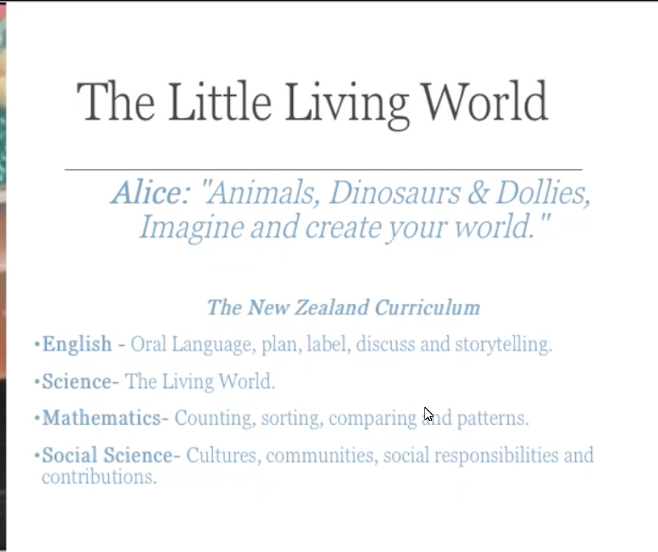
The little living world 

Animals, dinosaurs›, dollies

Imagine and create your world 


Placemats, cushion covers, books about specific learning 

Mix and pour places 


Maths 

Carparks 

Tidying up in a mathematical way (tall blocks, short, shapes) 

Baskets of maths 

Number candles 


Little ideas

Number of the day

Child’s wonderings 


Mat time- fun and exciting, taking mat time to places that are the children’s interests 


Literacy 


Children’s drawings and linking to the curriculum (English) 


Arts and literacy are married in some way 

Using loose parts 


Purpose/Audience/organisation/language 


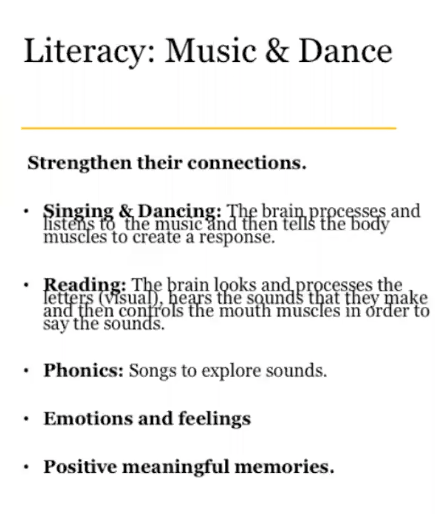
Music and Dance 

Music is a language itself. 

When you compare singing and reading, there is not much difference 

Dancing-gross and fine motor skills 

Dramatic play area 

Loose fabric 

Sunglasses

Headbands

Baskets

Shoes 

Accessaries 


Stepping into the story 

Tiger who came to tea 


Range of writing tools, thick crayons, chalk, stamps, large paintbrushes 

Envelopes, large pieces of paper, whiteboards 


Thursday, May 7, 2020

Supporting other teachers with ICT needs

Over the last 4 weeks, I have been creating little how to videos for teachers so that it will be really helpful for the teachers to navigate themselves during the time of online learning.
First thing I did was download Screencastify which allows me to record the desktop of my laptop. This way, I can show people how I am doing certain things on my laptop without videoing myself with a phone.
I have created videos about how to use Sunshine Classics and how to upload a video on Blogger. More helpful Seesaw videos were added as well.
I have shared this with the whole school so that the teachers can have access to it and saved it on our drive. 
I think I find myself always wanting to up skill myself and learn new things. I like to be creative and using Seesaw, I can add some creative aspects to it in terms of how I present the activities to the children and families.
I have also really enjoyed working with other teachers and communicate about how other people are doing certain things online and learn from each other. This itself has been a great professional development. I think that I feel more confident about using Google drive, Seesaw, Screencastify, Vimeo, and IMovie.
When I go back to school, I would really like to keep up the use of Seesaw with the children. Now the children have had some chances to use Seesaw and how they can communicate with me or others, I think this might encourage and extend the use of Seesaw in the classroom.

Friday, February 21, 2020

Inclusive practice: Using NZSL in the classroom

This year I have a girl who is deaf with cochlear implants in my class. One of my passions in teaching is to teach our children New Zealand Sign Language, and I have been learning NZSL for the last 5 years. Although I am not fluent in NZSL, I love learning this beautiful language.  For the last 6 weeks, I have had a private tutor and have been learning it properly again, and especially at being able to form a sentence in NZSL.

As the girl has cochlear implants and can hear with the device, she does not rely on using NZSL so much however she knows quite a lot of signing and her family would like her to develop more knowledge in NZSL so it has been great to work with the family and that I regularly sign in the classroom with the children.

Some of the changes I have made in my class are
Having a visual classroom schedule and have the pictures of the signs next to it. This also reminds me to sign if I forget a particular sign.
I also have a sign of the day so we can all learn different signs.


Other children have started to understand why I use sign with the girl and why I wear the microphone so she could hear. Now we are trialling using a microphone that children can hold so that she could hear if someone is talking in a class discussion.

After reading Ako article about NZSL in a classroom/school , I felt very inspired and that I agree that hearing children should be learning NZSL together with a child who is deaf. I always think that people who are deaf should have access to their language so that we could communicate with each other. The children in my class will learn many signs this year and this will help them understand how different we are and how unique we are to each other, and to help us communicate, NZSL is an important language to learn for everyone.

At the moment the children are learning to sign Te Aroha in sign and te reo Māori.  They love singing and learning new songs and I can see how the girl is very responsive when I use sign. She watches my sign and copies it. She also teaches me some signs that I don't know. It is truly the word of "Ako" where we learn from each other. She has a place in our classroom and has developed a great sense of belonging in our class.


Thursday, January 23, 2020

Developing phonological awareness

This year as we will have new children in the term, I thought I would do something differently about developing phonological awareness. Last year, I feel that I didn't spend a lot of time exploring the basic phonological awareness and Stage 1 so much as I focused on my inquiry as trying Yolanda's Stage 2.
As we get to know children, I will develop an understanding if they are able to differentiate sounds.  I want to spend some time exploring the components to develop phonological awareness such as sound discrimination, speech sound discrimination, alliteration, rhythm, sound breaks and rhyme. 

Here is the document that discusses developing phonological awareness. 

It is important that I provide various opportunities throughout the week, daily to explore sound discriminations and developing phonological awareness in a fun way. 


Saturday, November 30, 2019

Reflection on the science conference

Going to this science conference for 3 days with Edie has been very valuable and eye-opening experience. I really did not know what to expect for this conference and I feel that I have learnt so much about what science learning is about and what Edie has been trying to work on with the support from Royal Society Te Aparangi.

Sharing our science experience with others and listening to other people experiences have been really beneficial to understand how we can teach science and get the children to feel really excited and be engaged in the science experiences.

There were a lot of opportunities to discuss, share ideas and hear thought provoking ideas, and I really enjoyed this part. I like how Jen said about how teachers say that science is everywhere, but we as teachers have professional responsibilities to teach our children and that we need to know what we are about to teach.

Over the 3 days, I thought a lot about myself as a teacher, science teaching and science in our school. I have never really thought myself as a science person, someone who is really interested in science although I do have some interest areas like sustainability, insects and looking after our environment. If I really want my children to think like a scientist or act like a scientist, first of all, I need to establish their ideas about scientists. Then, we can establish and explore our ideas about scientist. When we know that we are all scientists and we all do what scientists do in our daily lives, I can then use the language like "I like the way you are thinking like a scientist!" Using words like observing, describing, and gathering data in my practice is also really important so that it is explicit teaching and they will understand what these actions mean. I feel that I know where I want to start from next year with my new group of children to explore science in a more explicit way.

Listening to Edie and sharing ideas with her has been so valuable and I have learnt so much from her for the last 3 days and have felt her passion in teaching science. I didn't know how much time and effort Edie has put in order to create the past unit plans. It was so great to work together to develop the next year's unit and we were very excited to share this with our group and get some feedback.


Saturday, June 15, 2019

Trying out Yolanda programme

After going to Yolanda's training. I really wanted this to be my inquiry to see how effective it will be for me and the children.
As I was waiting for the resources to arrive, I have found a good site for pictures with alphabets. I cut out just pictures to use for the Stage 2 programme.
I have gone through Yolanda's video and wrote down some steps of the Stage 2 and Stage 4 so that it will be easy for me to read as I go through the steps with the children.
Stage 1 and 2 
Stage 4 

So far I have been trying the stage 2 with the whole class and it is working really great. With my target children for the inquiry, I see them every week to see how much they have retained the letter sound knowledge.

I do feel that it makes children to feel successful as it is very achievable for the children. I felt that organising and managing the whiteboards/pens/eraser were a bit chaotic in the beginning, but I used Velcro to attach a pen and an eraser for each whiteboard and this seemed to work better so that I am not spending too much time giving out the items in the beginning.

I also feel that in the beginning, I needed the script for me to go through the steps of the Stage 2 properly but now I have done this for the last 2 weeks that I have felt more confident at doing the Yolanda programme.

Saturday, May 25, 2019

Yolanda Soryl Phonics Training

How to teach phonics.
7 stages of phonics.
Page 14-61

Phonics:
Shinderbell
Blending the sounds -essential for reading

Segmentation-breaking down the sounds

Avoid writing, writing safe stories (they know how to write these), they dont know how to break the sounds
Blending and segmentation are really important

1, how to hear
Decode- make sense- read
Look at the word and know the word
Graphic knowledge -memorising the shape  (h( sound) and is, his)
Phonics
Grammar
Word recognition and graphic knowledge
Context/meaning

Lowest reader - phonics knowledge

“Get the words” first step for comprehension
Grammar search light -reading their own writing, reread their own writing (checking what they are writing
Good writing re read , poor writers dont
Context-looking at the pictures/ rereading own writing/ does this make sense?

Best readers and writers (connecting levels)

Components of reading
Decoding
Comprehension
Fluency-reading and effortlessly (slow reader- losing meaning) Working hard at decoding-not getting the meaning. If they are able to read fluently they can attend to comprehension.

Look at the words and know just like that (brain training)

Brain activity
Good reader- left side of brain
Struggling reader- both sides
Phonics can turn the left side brain on
Our brains are not wired for reading

Dyslexia or learning needs-Genetic
Deficiency and lack of repetitions

Teach it again and again until we dont need to

“How my brain learns to read”
Teaching phonics makes a big difference later on in their life- reading
Boys- advantage to teach phonics, children with english as a second language

Hear them read out loud everyday.

Phonological awareness
Spoken language dev
Letter/sound knowledge

Importance of phonological awareness at school entry

2 sounds (stage 3)
3 sounds (Stage 4)

Stage 1
Stage 2 -they know the first sound (do they know the first sound? ) 6 weeks to teach it 1 week to test it and again
Stage 3 - last sound (one week to teach it)
Stage 4 -middle sound once  (dont teach stage 4 twice) - blending and segmentation (confusion with vowels)
Stage 5 -how to hear in every sound in a word Diagraph- sh two letters for one sound (hands on the hip)
Digraph is not a sound (a way of spelling a phoneme)
Make sure they can hear every sound of a word to move onto 6
By one year after starting school (phonics is finished by then)

Stage 6-7 - Year 2 long/short vowels (2 years after school entry)
Play  train

Late   they

So many ways to write (8 ways to write)

Page 13- system -school needing to have one system

Use phonics and graphic knowledge and ticks

The child needs to be able to read it by themselves -structured approach

Stage 1

Little and often through out a day

1 Close eyes-what can you hear?  (conversations about sounds -rain, dog barking) Tuning into sounds
Is it motorbike or truck? Teaching them to how to hear
Sound track game
Using instruments -bells/shakers 4, 6, 10 instruments Similar shaker sounds (sounds table set up) boxes with different things inside to shake


Ability to hear different sounds (feeling it in their tongue) moving tongue activity
“I say, you say”

Make animal sounds -fluency faster “On your marks” make them think faster
Naming children in the line
How quickly can they tell you, give it to them faster

Alliteration
“I say you say”  “what did you hear?” holding hands with children with learning needs

Animalia (3 words)
Starts with g with a pointing finger

Reading aloud to children 5 times a day

Rhythm coping rhythm (children not able to hold structure) children giving it back differnetly

All the things we do in music/movement -phonological awareness

Ability to hear sound breaks (sylable break, clapping with sylables) 3 times (one, two, three)
(Overcoming dyslexia)

Before the guided reading clapping
Voice loud and clapping

Robot arms sounding out and finger to blend

Rhyme -hear and generate
Nursery rhymes (make handouts to parents) Good book of nursery rhymes
Some off by heart (choose 5)
Missing word in rhyme
I like rice, it is nice.
5 rhyming families (do it faster) rhyming strands (mat, rat, fat… ) can they generate?

Phonological awareness book

Start at Stage 2 and sprinkle Stage 1  (10 minutes extra phonological awareness) Little and often

Stage 2

Letter sounds/graphine

N m s long sounds

Revising with the children who forget
Revising on their own- and getting them to wordshark and steps “what is this sound? “ toileting, duty time, every hour show the card to get them to say the sound

Stepping in before failing- keep them in the class (write the letter on the back of their hands, pointing and say the sound)


Letter/alphabet cards

Side of the teachers are the lowest
Composition :Talk to the neighbours about what they want to write about -come up with one sentence
Holding structure: clapping hands and say the sentence (teacher writing down the sentence)
Tell the children to use the sounds and words
Tell me again your story (your story is …..)
Point to the word I use bluetac next to the word I 2 hands for writing
Game-sound first sound for game g g g g game, point to it and bluetac, full stop  
And pictures next
Exactly the same next day
Everyday for 2 weeks (word by word support)
Taking the support away (giving her choices M or n?)
4 weeks later (pointing to the row of the alphabet)
One sentence everyday


Writing is your voice written down


The vowels

Practice with clapping three times combination of them

Maintenance (a e i o u strip) random order then without pictures free from the website

Copy the student say the sounds -have a look at the you tube video

Heavy duty letters

You have to go right to left so the children can do the the other way (video on site)

Smart kinds poem

Assessment
Letter name/sound/ the words start with the sound
Teach stage 2 and test

Stage 3
Nip flip grip pencil holding

Puppet fish-fit what is the sound he cant hear.if he is right  give him a round of prouse
That is called the last sound
Using pictures
First phoneme - go back and revise
First sound, last sound, last sound with a puppet


Stage 4

Non sense words -decoding words best decoders

Get to the word the fastest way
Phoneming words
Fingers and blend after
Sounding and spelling

Grapheme is written form of phonemes Shock 3 always the same
Satage 4 words
Hog
Chop
Shock

Stage 5
Frog  f r o g 4 dont need to teach the blends need to hear phonemes
Hear every sounds
Smack
Frog


Stage 6
Way 2 sounds ay

W eigh
2 sounds no matter what
Rocket
D augh t er

Phonics manual
Ask a 5 year old

Fluency
More time reading
Anyone reading aloud to them
Tuakana teina
As many opportunities for them to be reading out loud
Read faster
Train them to read faster

Stage 4-reading the cards faster
             Read the funny sentence with expression
             Letter cards
             Word cards
Give your children opportunities to know what word it is  

Stage 2 writing quickly (is my go) without thinking about it
           
Shared writing
Everybody writing
Children give the children what they can do, and teachers fills it in
What will I need? Question mark

Spelling
Take a word from a shared writing
Like touch each letter
Louder, whisper, write it on your palm, silently, sing it (L, I, K, E)
Close your eyes
Write it on your whiteboard

Stage 5 hearing every sound in a word

Get them into writing using the words they are learning
Go up a stage and revise with the previous stage
Hear every sound
Wh ck

Q u 2 phonemes (qu)

Stage 6-7 long volwes

Key words  


Saturday, May 5, 2018

Classroom that reflects bicultural practice

In the PL meeting today, we watched this video on the importance of bicultural practice in Aotearoa school by Janelle Riki-Waaka.

Watching this video really inspired me and made me think about what I do as a teacher to ensure that there is bicultural practice in my classroom, and how much I value and use tikanga and te reo Māori.
In the video, she asks "How would I know that I am in school in Aotearoa?"

Interestingly, I was thinking and reflecting about new Maori children visiting my classroom this morning with their mum. They were participating in our morning at time where I sang many Māori songs and did some dances as usual. I was thinking how the mother felt listening to the songs and watching our children really enjoyed singing and dancing to our kapahaka song. For me, as a teacher, I want to make sure that I create a learning environment that respects and value our Māori heritage by practicing it. On our wall, it is obvious to know that this classroom reflects the biculturalism as our wall display include many Māori words/phrases, and children have understanding of what these represent and the importance of it.

Our children know the school whakatauki "Stand tall, Reach high, Tū tangata, Tū māia", and its meaning and significant linking to the beautiful redwood tree at school. Our children are learning about their pepeha and some of them introduce themselves confidently.

Our children are familiar with ngā ātua Māori, and love listening to 'In the beginning' stories. They have great curiosity in Maori legends' stories and have great understanding of Maui.

I use te reo Māori as much as possible in my class, but I think there is room to strengthen my te reo as well.

Reflecting on this video, what Janelle discusses has really inspired me and really encouraged me to think more reflectively on my bicultural practice and move further within my practice.

I will keep working on an increased use of te reo in my class, introducing new waiata to the children, read te reo Maori books (which our children really enjoy especially the books written by Peter Gossage), and adding more sentences for our pepeha.

Setting up maths success 2022

 Explore the links on the first page  NZ maths have problem solving part  Oral language driving the math  There are different ways to explor...